Audience positioning is always an area that students struggle to comprehend; it's not sitting on the sofa in front of the TV! It takes into consideration who we side with in a narrative, balance, bias, what we are(n't) shown and so on.
The video below takes this to a new level and literally positions the viewer as a refugee using their phone to escape atrocities and striving for something better. The use of a point of view position allows full engagement; the verisimilitude of the device, messages, whatsapp etc doesn't allow your focus to deviate and is very clever.
The video is best viewed on a mobile or hand held device.
With the Olympics and Paralympic Games in Rio just around the corner, Channel 4 have done themselves proud once again in relation to the representation of disability in the media.
Whether you're looking at institution and ethos, identities or representation, this trailer is a must see for media studies students.
There has been some controversy around the trailer with some saying it's too glamorous, or others saying it misrepresents people with a disability as they are made out to be special humans with magical powers; The superhumans. The fact that this particular social group is being represented in the media is a step int he right direction and lessens the stigmas attached.
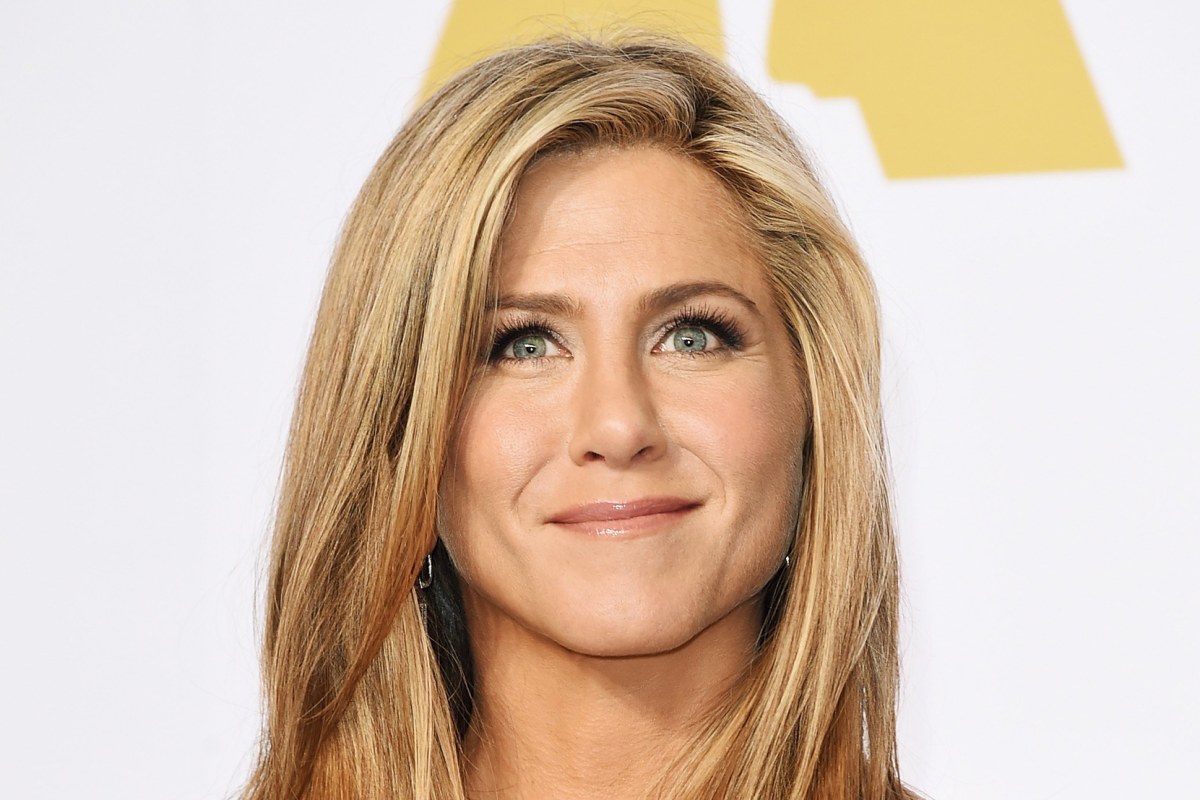
Jennifer Aniston, star of Friends and an A-lister celeb, will always face scrutiny due to her position - however, I must admit that the press has hit a new low - do we care if she is pregnant or has just eaten too much? The Guardian newspaper released a video which certainly raises some interesting points which can be accessed on the link above.
If you're studying representation of gender, the female identity, or the idea of celebrity, this is a must to write about contextually!
The concept of a new Pokemon Game will certainly hail both new and old audiences and the concept of the new geo tagging game seems a great idea and feat of new technology. However, the safety aspects and issues it flags up, particularly for more passive and let's say, stupid audiences, is quite shocking.
The discovery of a dead body, the potential risks audiences face in terms of their safety - getting run over, phone jackings...... is this game a good thing? Put it this way - nintendo are laughing all the way to the bank since their shares have gone up 50% since the release of the game. That's until, something goes wrong...
Some might say that Video Game Violence is a thing of the past - or is it? Perhaps it is just something that is still happening, the media just choose not to tell us much about it any more - hegemony at work! The documentary below is about the story of Breck Bednar, an innocent teen gamer who became friends with someone online that ended in tragedy; it's still relevant, the risk is still there and this is certainly still an issue and debate in the media.
The Chilcot Report is an independent inquiry looking into whether or not it was right to go to war in Iraq for the second time in 2003 and what lessons can be learnt from this event.
I don't need to tell you about what's been going on in the news over the last week, but I can tell you this; this is definitely an interesting time for all of us!
No-one really knows what the future holds, but avid media studies students, you need to keep your eyes and ears peeled for updates, how the news is being reported, what this means for not only your country but also imports/exports ad how this could affect the media industry.
There are many stories related to Brexit that link to the wider contexts: Cultural (How will this change ex-pats'/immigrants' attitudes?), Historical (The Union was something that happened after the 2nd World War to aid peace time Europe and trade); Economical (How will the pound survive; how will this affect stocks, shares and business?); Political (Who will succeed David Cameron? What will happen to Corbyn? What will happen to societal attitudes?) and Sociological (How will society react to the outcome? Will it stick together and work better than before, or be segregated?).
This is also an interesting case study that will develop over time if you are looking at Representation (MS1 WJEC) or for identities (MEST 3/4, AQA).
The Media has certainly shown Right Wing ideologies and Extremism in a very narrow way since 9/11 particularly only really depicting Muslim Extremism.
However, it occurred to me that the tragic and horrific death of MP Jo Cox last week, was in fact a result of British Right Wing Extremism. Although no officially affiliated to the Right Wing group Britain First (due to his comments), it was clear that Thomas Mair, the man being charged for her murder is a victim of Right Wing Extremism; one area that the Media, and perhaps the government and police, overlook.
It struck me that the hegemonic view of the Media only shows Right Wing ideologies, Extremism or Fascism coming from people who aren't white and British; this in turn shows the two-step flow, with Media Institutions acting as opinion leaders and passive audiences taking on board their narrow minded messages and values.
There's certainly a growth of white Right Wing ideologies with the growth in popularity of parties such as Britain First, the EDL, and perhaps not quite on the same extremist scale, UKIP.
It will certainly be interesting to see the outcome of the Referendum at the end of the month..... as well as the outcome of the Presidential elections in November as these are ideologies that Trump is embodying also....!
If you're of a certain age, you will remember that every social activity you attended, the cinema, bowling, Quasar and the like, then there would be a games arcade. The flashing lights, the noises, the big screens and gaming chairs - things that made computer games more exciting than your Sega Mega Drive at home. But due to the increase of digital literacy amongst audiences and the decrease in prices of consoles, games arcades didn't offer us anything that we couldn't get at home.
The increase in VR technology has certainly meant that games arcades could be making a comeback! This is obviously a USP in the market, and one that is too expensive for Joe Bloggs to afford. New and Digital Media is certainly still evolving and still having an impact on the way audiences consume gaming.
Everybody has an opinion about the move of BBC3 online, however you cannot fault its controversial and thought provoking documentaries.
The 2 documentaries below are just 2 examples of insightful and eye opening programming by the BBC. If you are studying representation of race/ethnicity for MS1, WJEC or identities for MEST 3, AQA, then these are a must to watch.
Be warned, there are some shocking scenes and scenes which you may find distressing, nevertheless they are very informative and give many fruitful examples to write about.
There's been much debate whether or not the increased usage of social media has had an impact on the mental health of audiences; is this really a version of the hypodermic needle model coming to fruition on a large scale?
It was always going to be hard to live up to the antics of Jeremy Clarkson, Captain Slow - James May, and Richard 'the Hamster' Hammond, but has Top Gear lost control?
Poor Chris Evans; now that he is the face of the new Top Gear, he has really taken the brunt of all of the negative comments. It has been reported that the programme has lost a third of its audience - but why? Yes there are loyal fans, yes the scriptwriters haven't changed from the previous formula - perhaps the BBC need to realise that Chris Evans just attracts a much different audience to Jeremy Clarkson?
In terms of John Fiske's Fandom theory, we aren't necessarily dealing with die hard fans in either case, but Clarkson with his witty and controversial comments and sometimes senseless motor mouth attracts a very different audience to the more tame and family friendly Radio 2 presenter Chris Evans.
Stuart Heritage's article for The Guardian - https://www.theguardian.com/tv-and-radio/2016/jun/07/top-gear-in-defence-of-chris-evans
Sims probably isn't as popular as it was in it's early 00's hey-day, but it's certainly got a USP that has got it noticed in the saturated video game market. Due to wider contextual developments such as the gay marriage and societys' adaptability where transgendered people are concerned, it's a no-brainer that these, what once were 'issues', are now being reflected in popular culture. Sims is allowing 'genderless' characters and developers have given audiences the power to fully customise their virtual-selves.
This is certainly a postmodern response to societal attitudes and changes; what once was the simulacrum in Jean Baudrillard's hyper-reality, is now becoming an actuality.
It will certainly be interesting to see how other platforms and mediums respond and adapt to this change!
Studying AQA MEST 3 The Impact of New and Digital Media? Studying the impact of technology or globalisation for WJEC MS4? Or OCR Critical Perspectives in Media - Digital Technology? Then you should be writing about the example!
Convergence; in a time where you can view and access everything on one device, it's a no brainer how easy it is for things to go viral, especially novelty videos. Synergy; Twitter links to Facebook, which links to Youtube, which can be shared through WhatsApp, which can then be Snapchatted.... with so many different thumbnail icons to click on with ease, again, it really is just the click of a button that can make an image or video spread like wildfire.
Candace Payne; a 37-year old mother from Texas who was overjoyed at buying one of the most novel items from the Star Wise merchandise collection. You probably didn't even know her name, but simply know her as 'Chewbacca Mask Woman'. With over 140 million views, (that broke Facebook), being invited on The Late Late Show and star with James Corden and JJ Abrahams in a version of Karaoke Car Pool, and being invited to Facebook HQ to meek the Zuckerman himself, it just goes to show that if you can pull off a stunt like this, planned or not, us mere peasants do have the chance to be famous!
In an age where new and digital media is taking over our lives, with business relying on technology, using iPads in the classroom, or 4 years olds picking up an iPhone and knowing how to unlock it and play a game, it's no surprise that due to our digital literacy, and in Marshall McLuhan's terms, we want to be a part of a 'Global Village' where we can share videos, images, memes... making them go viral.
We all love a Disney film; the originals like Dumbo, the more up to date Pixar films like Toy Story, or just good ol' favourites such as Beauty and the Beast. Disney have been accused of many things since making these children's favourites; institutional racism, hidden sexual meanings amongst others. Speculation suggests that the new Finding Dory film features a lesbian couple, which, in wider contextual terms, clearly shows that the institution is responding to cultural and sociological change, especially with the legalisation of gay marriage in many countries. Is Disney responding to Market Imperialism? Has the audience made it clear that they want to see fairer representations of what are considered to be niche social groups in the media - is this Disney's response to it? If this is true, this is certainly an interesting case study to write about!
This could also like in with Orange Is The New Black which has also broken boundaries in terms of a homosexual presence in the media, and more importantly one of which that has been deemed acceptable. You could also link these examples with Queer theory too.
For those of you studying A Level, this advert, albeit awful, is a great example for you to talk about representation. Whether you are studying WJEC, MS1 or MS4, or AQA MEST 3 (identities), this advert is a clear example of Cultural Imperialism; this sort of message is obviously acceptable back in China. As for Western countries where we have had a hegemonic shift in terms of our messages and values that probably aren't so right wing any more (unless of course your name is Trump!), this is unacceptable due to post-colonialsm and because of what we now know as multiculturalism and diversity.
This is a relevant example for you to use to illustrate your knowledge and understanding of issues and debates; you can certainly reference Stuart Hall's and Alvarado's ethnicity models when using this example.